
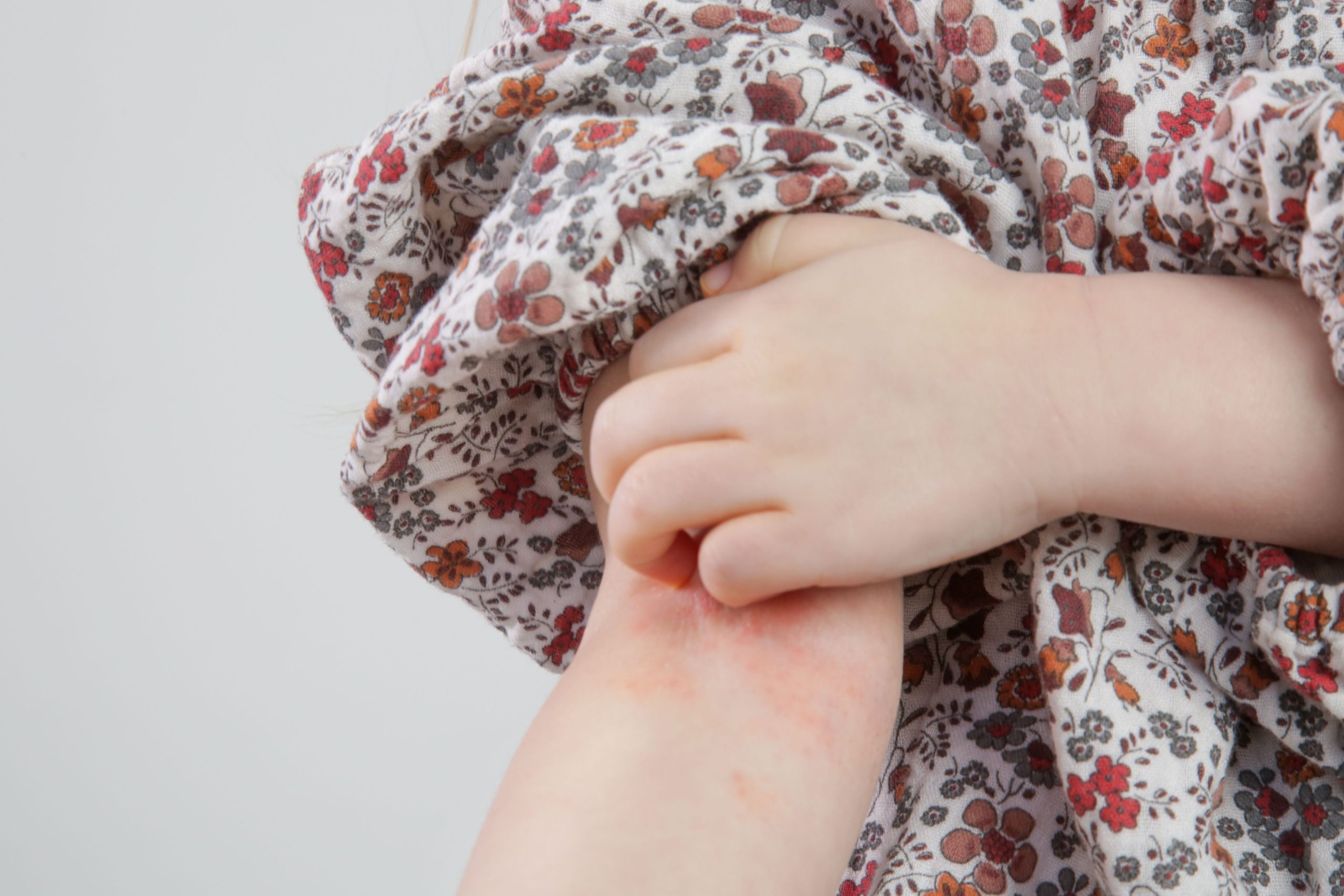
Children with atopic dermatitis (AD) are significantly more likely than those without to have positive patch test (PPT) reactions, and should be referred to a specialist for evaluation of underlying allergic contact dermatitis (ACD) comorbidities, according to study results published in the Journal of the American Academy of Dermatology.
Less than 10% of children are patch tested for ACD despite nearly 16.5% having been diagnosed with the skin disease. AD is also present in at least 20% of children. However, many children with ACD are often misdiagnosed with AD since both are similar in presentation. Therefore, researchers conducted a retrospective case-control study to determine the prevalence of common contact allergens in children with vs without AD.
Data from 14 geographically diverse centers in the US were collected using the Pediatric Allergic Contact Dermatitis Registry. Patients (N=912) with vs without AD who had been referred for patch testing from January 2018 to December 2022 were included in the study.
Among children with vs without AD, approximately 38.4% and 38.7% were boys, 61.6% and 61.3% were girls, and 61.8% and 74.4% were predominantly White, respectively. Children with AD who were patch tested were more likely to be Black (odds ratio [OR], 1.82; 95% CI, 1.21-2.74; P <.0001) and were less likely to be White (OR, 0.56; 95% CI, 0.41-0.76; P =.002).
Children with AD had a higher risk for atopic comorbidities, including asthma (OR, 3.09; 95% CI, 2.02-4.72; P <.0001) and allergic rhinitis (OR, 1.94; 95% CI, 1.39-2.70; P <.0001) compared to children without AD. They were also more likely to have visited a greater number of health care providers (mean, 2.3 vs 2.1, respectively; P =.003) and had a longer history of dermatitis (mean, 4.1 years vs 1.6 years, respectively; P <.0001) prior to patch testing. Additionally, children with vs without AD were also more likely to have had more than 1 PPT reaction (P =.005), a greater number of positive PPT results (2.3 vs 1.9; P =.012), and a more generalized distribution of dermatitis (P =.001). Lastly, children with vs without AD were significantly more likely to test positive for certain allergens, including bacitracin, carba mix, and cocamidopropyl betaine.


